Workspace
A desk with room to think
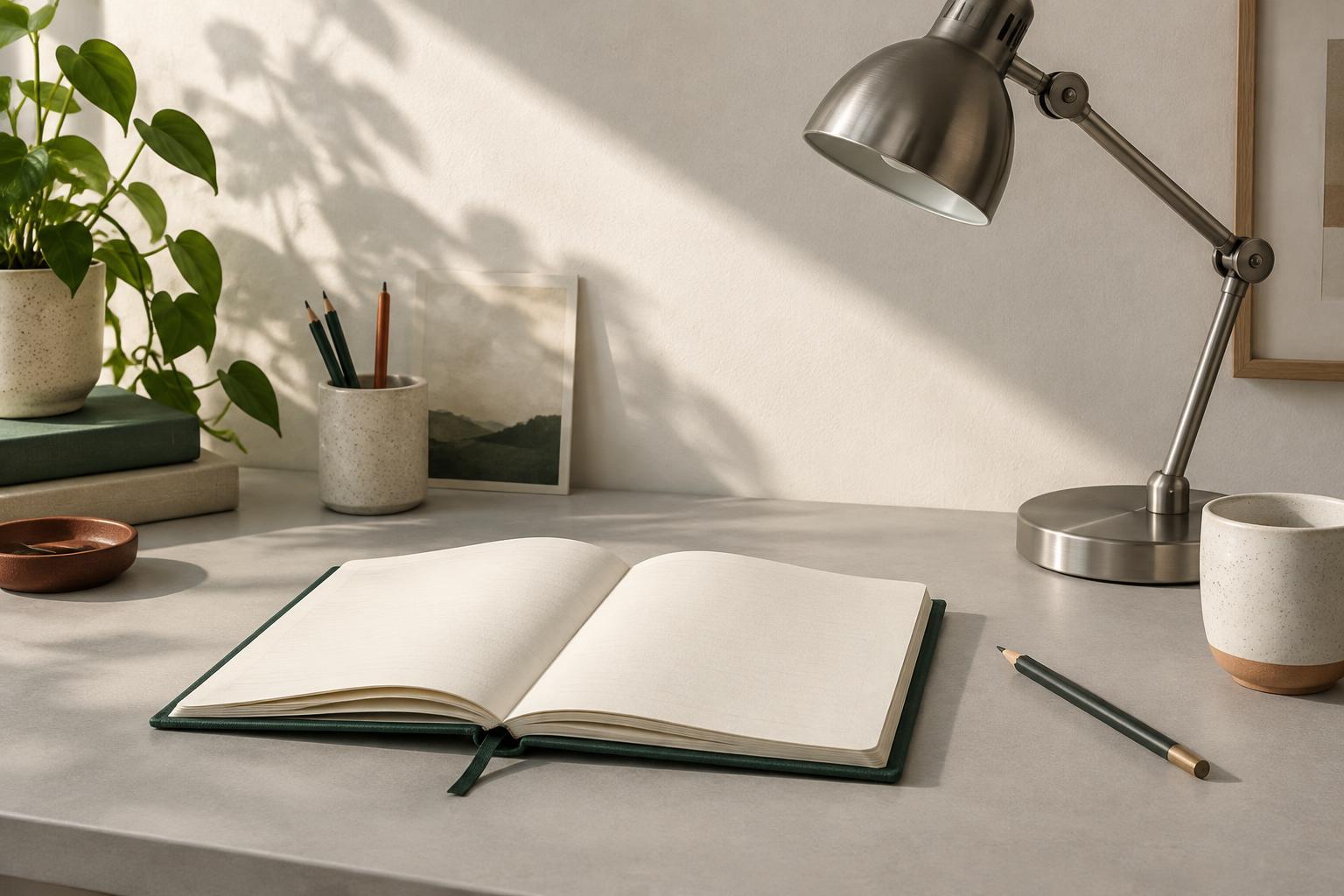
One open notebook, one pencil and a clear place to begin.
A notebook. A useful object. A place to pause. Notes on the small things that make room for thought.
One open notebook, one pencil and a clear place to begin.
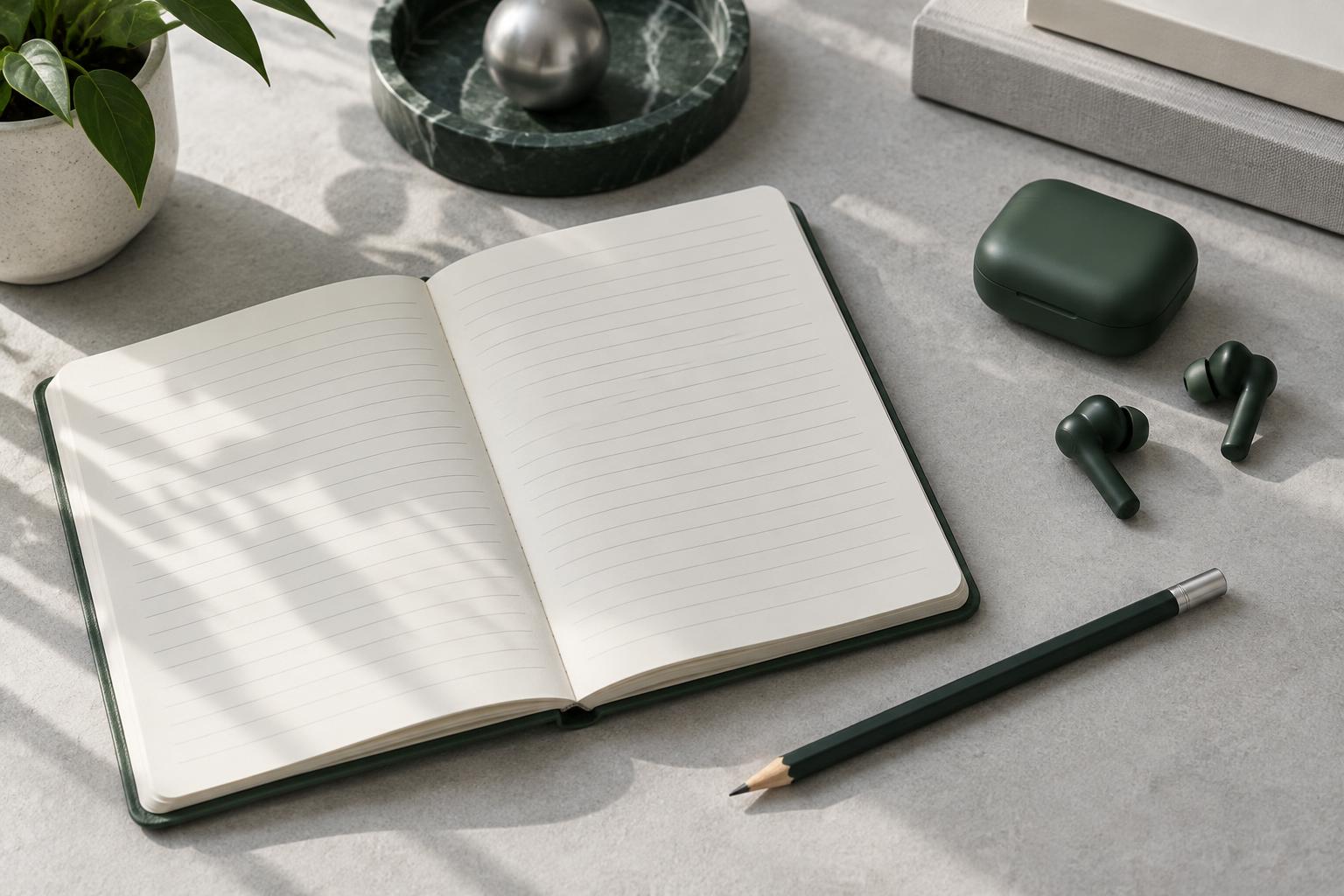
A small question about making everyday actions feel clear.
Start with the work in front of you. An open page invites a sentence; a pencil within reach makes it easy to keep going. The lamp belongs where the page needs light, not where it fills the room.
Leave a little space around these things. A desk does not need to hold every idea at once. Let it hold the one you are working on today.
Give an idea a title before deciding what it needs to become.

Notice one thing before moving on. Keep one question for later.
Some notes begin as a question, others as a phrase heard in passing. Write enough to recognise the idea when you return. A title and a few lines can be a good beginning.
A bench offers a place to put a notebook down and notice what has been passing by. Before moving on, write one thing you saw and one question you would like to keep. Neither needs to become a conclusion.
Start with the task, then choose the objects.
Leave room for the words that matter.
A small observation is enough to begin.